People know they should drink more water. That's not the hard part. The hard part is actually doing it consistently. About 1 in 8 Americans lives with diabetes (CDC, National Diabetes Statistics Report, 2026), and hydration compliance is especially critical for diabetics, athletes, and people managing kidney conditions. For this audience, "drink more water" isn't a wellness tip, it's a health requirement.
I joined Waterbent as the Senior UX/UI-Designer on a lean, three‑person core team, working alongside the Project Manager and the Developer, and owned the design of the mobile experience end‑to‑end, from early research through to a shipped product.
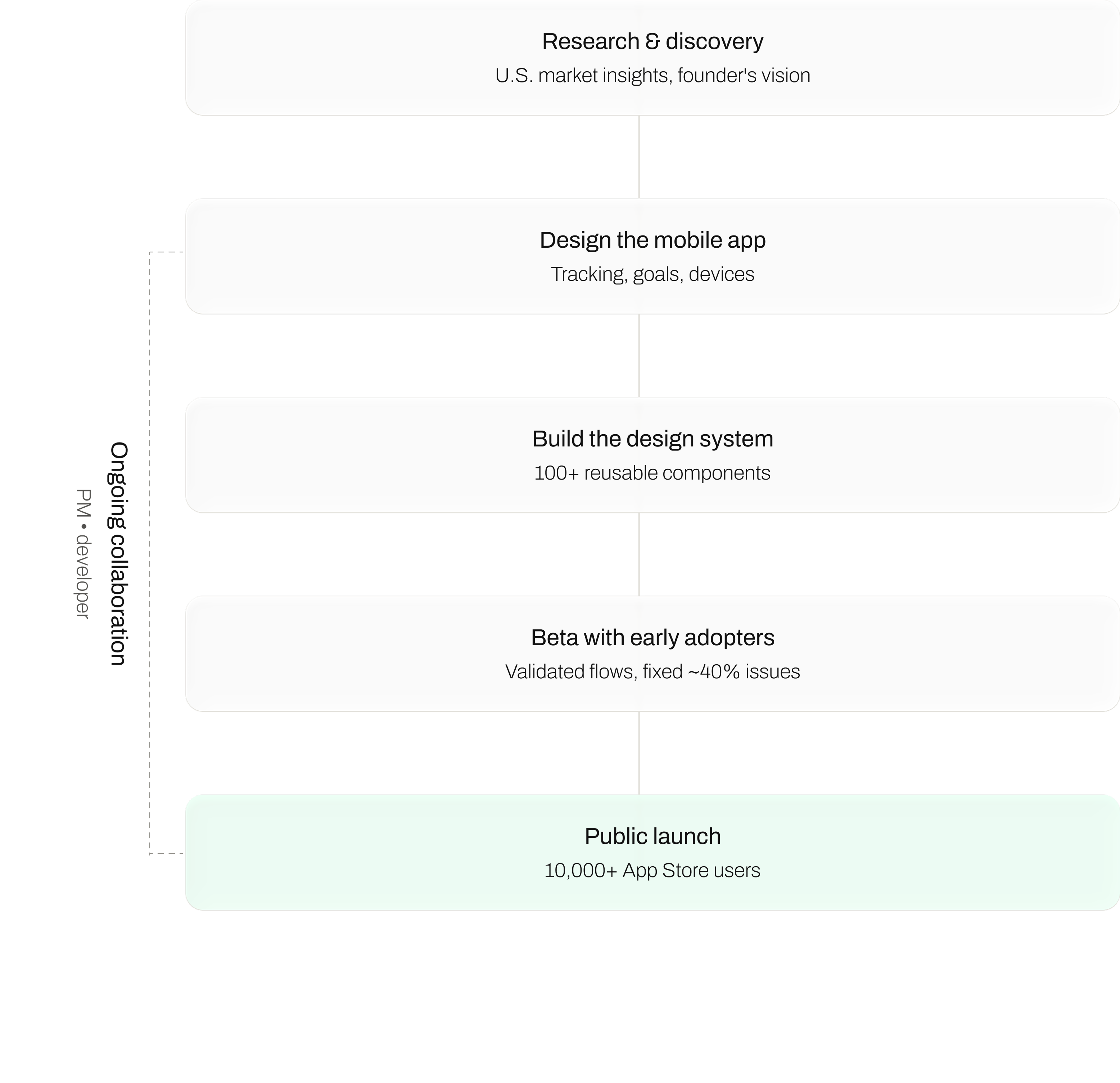
- UX research and discovery, translating U.S. health‑market insights and the founder's vision into a validated product direction.
- Designed the full mobile app experience: daily hydration tracking, personalized water‑intake goals, connected‑devices control
- Built and maintained the design system, working closely with the Developer to keep components implementation‑ready and consistent as the app grew.
- Partnered daily with the Project Manager on roadmap and scope, and with the Developer on feasibility and handoff, plus engineering, product, and health‑domain stakeholders to keep everything in sync.
- Planned and ran the early‑adopter beta, turning real user feedback into a prioritized backlog of usability fixes ahead of public launch.
I reviewed the hydration apps already on the market and found the same two failure patterns again and again:
One‑size‑fits‑all goals. Most apps default to flat "drink 8 glasses" target, with no regard for a person's weight, activity level, or the climate they live in.
Manual logging fatigue only from app. Nearly every app relies on the user remembering to tap a button each time they drink, and industry data backs up how badly that fails: health and fitness apps average roughly 4% user retention by day 30 (industry benchmarks, 2026), and manual‑entry trackers consistently underperform automated ones: in comparable food‑logging apps, one‑week retention runs 68% for manual entry versus 89% for automated logging. People stick with it for about a week, then quit.
Key insight. Drawing on the founder's domain expertise, one pattern stood out: the problem was never awareness. It's consistency. That matters clinically, too: even mild dehydration concentrates blood glucose and strains kidney filtration, so occasional hydration isn't enough for someone managing diabetes. This reframed the brief: replace generic targets with personalized goals, and give people fast, frictionless entry points to log intake, from Apple Watch to a home‑screen widget.
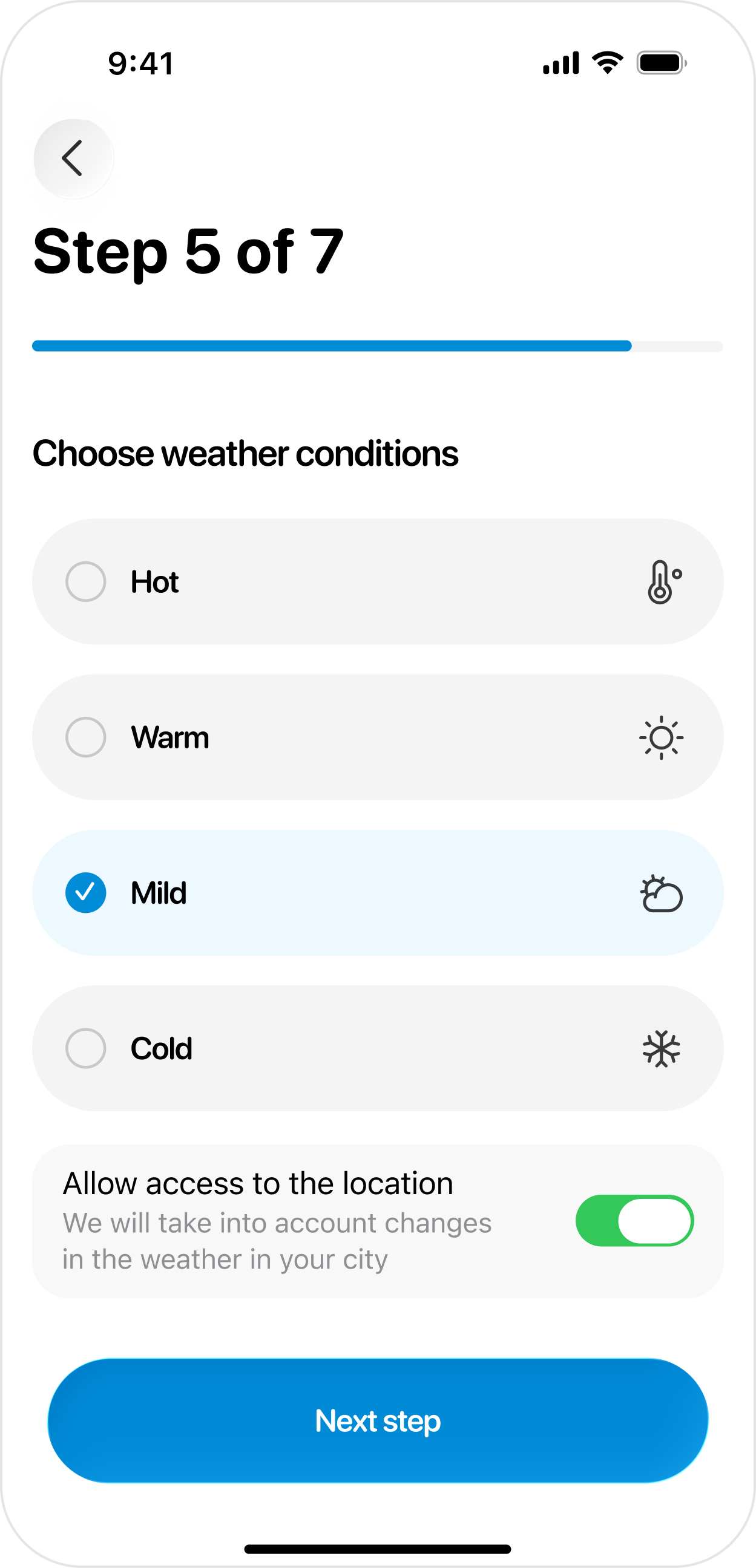
first, we also synchronize the user with the Health app and set up personal notifications based on the user's schedule.
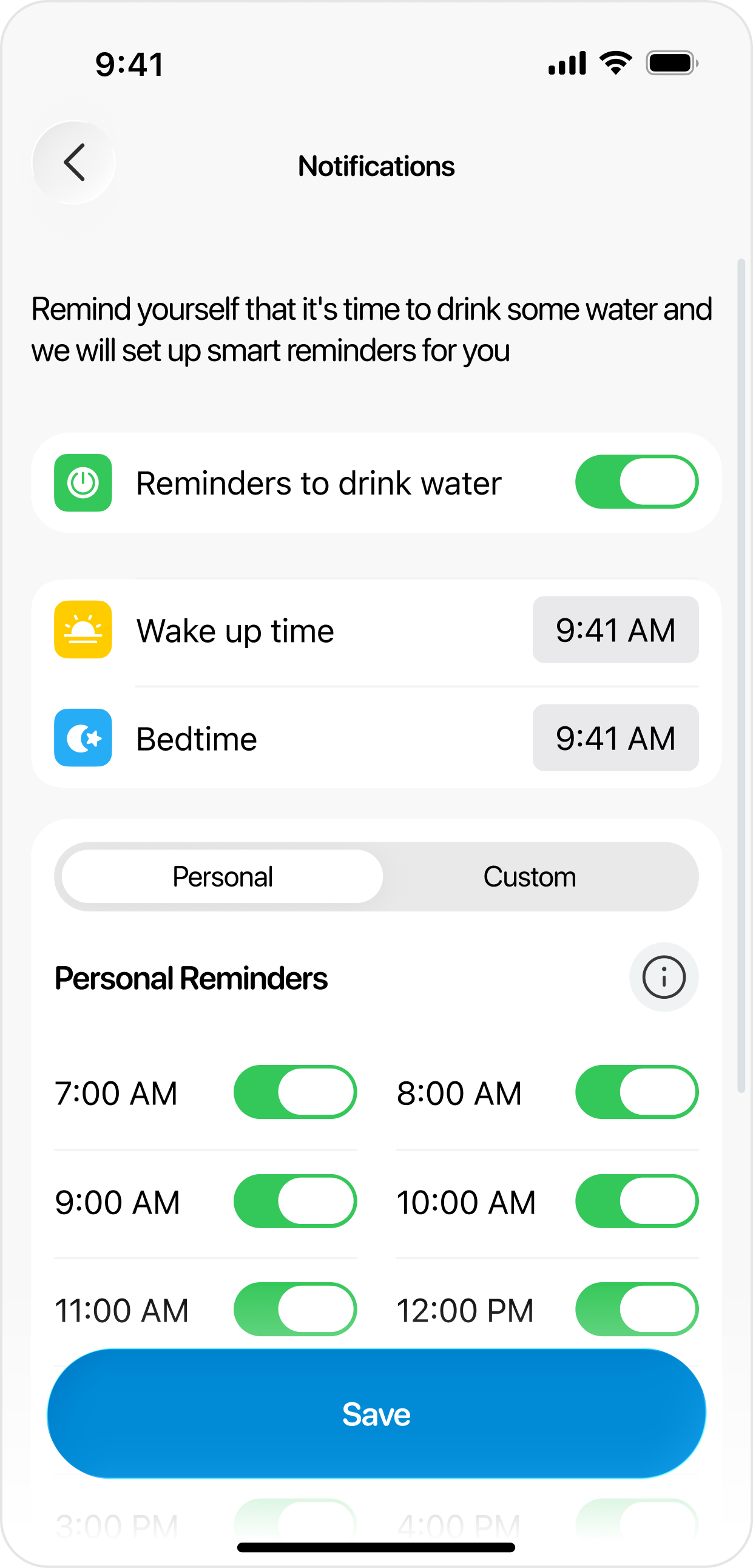
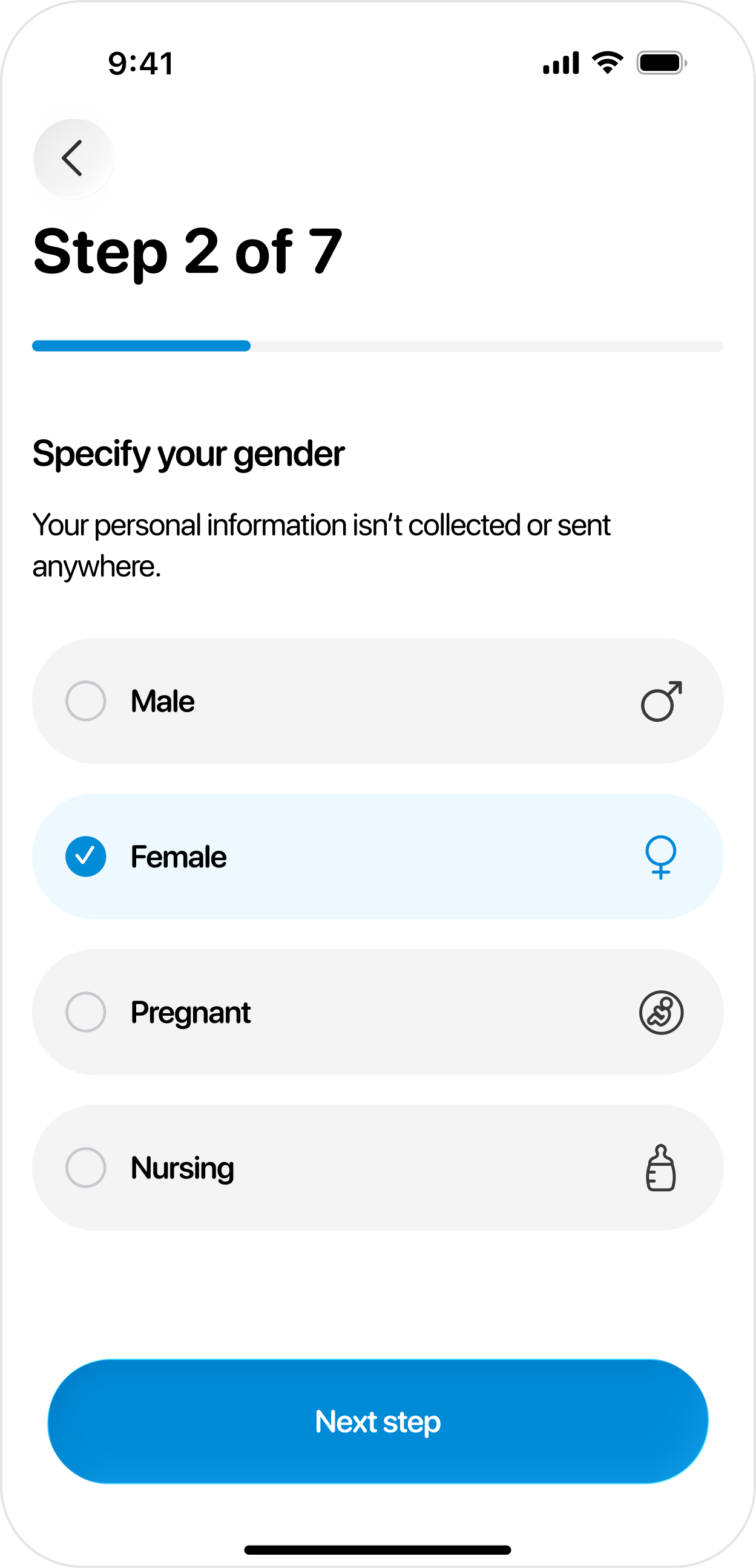
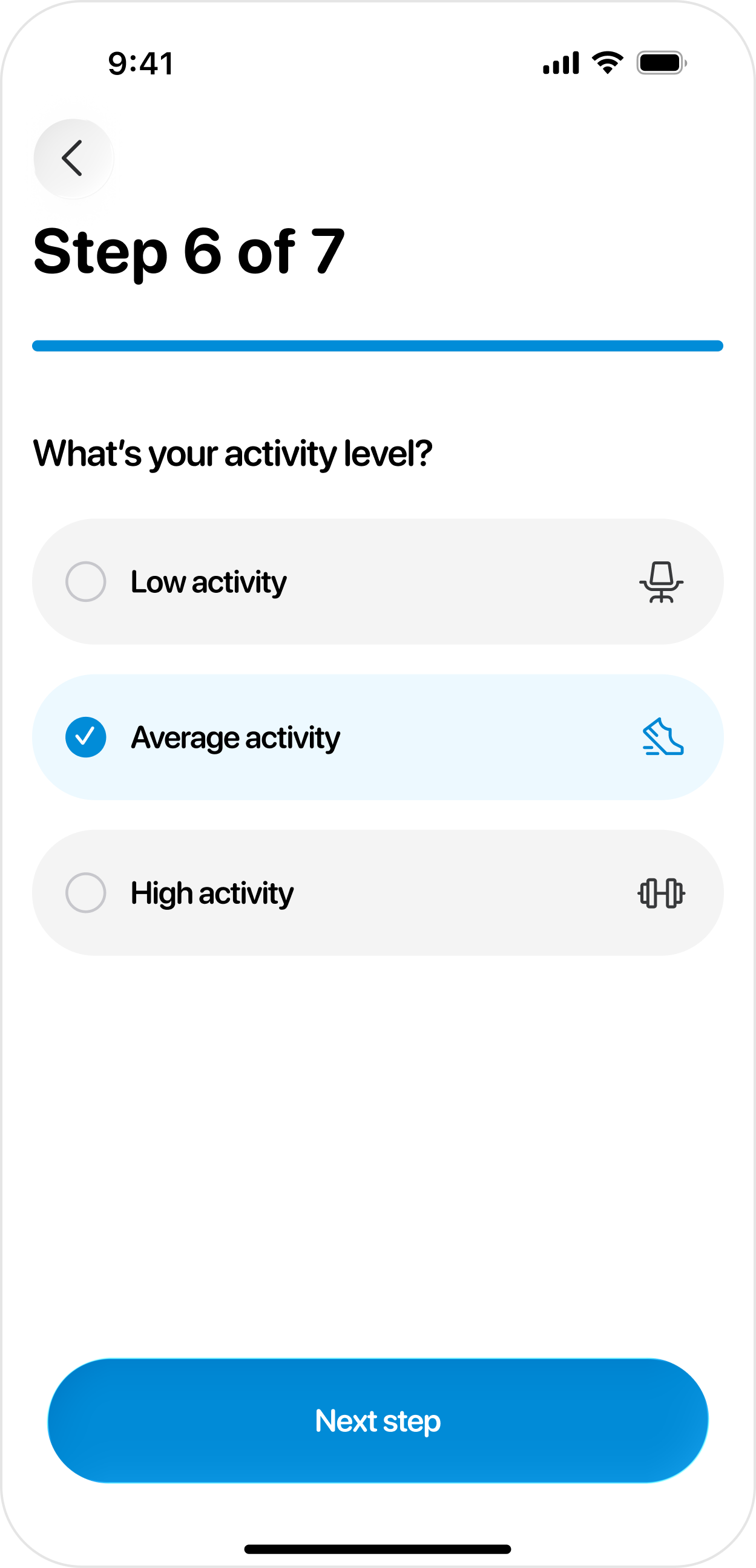
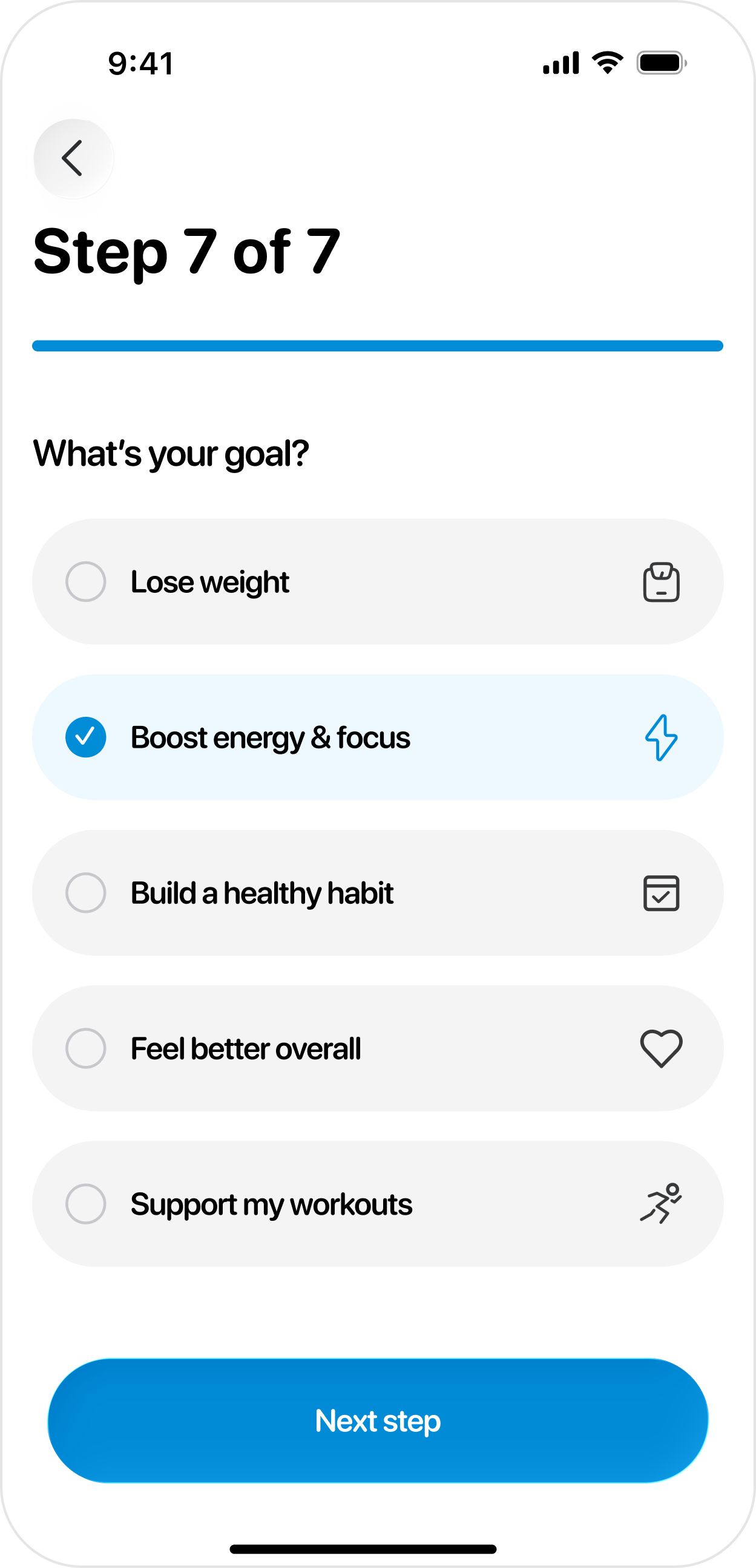
Personalized, adaptive goals: intake targets calculated per user based on weight, activity, and climate, rather than a generic daily number.
onboarding for first login and personalized recommendations
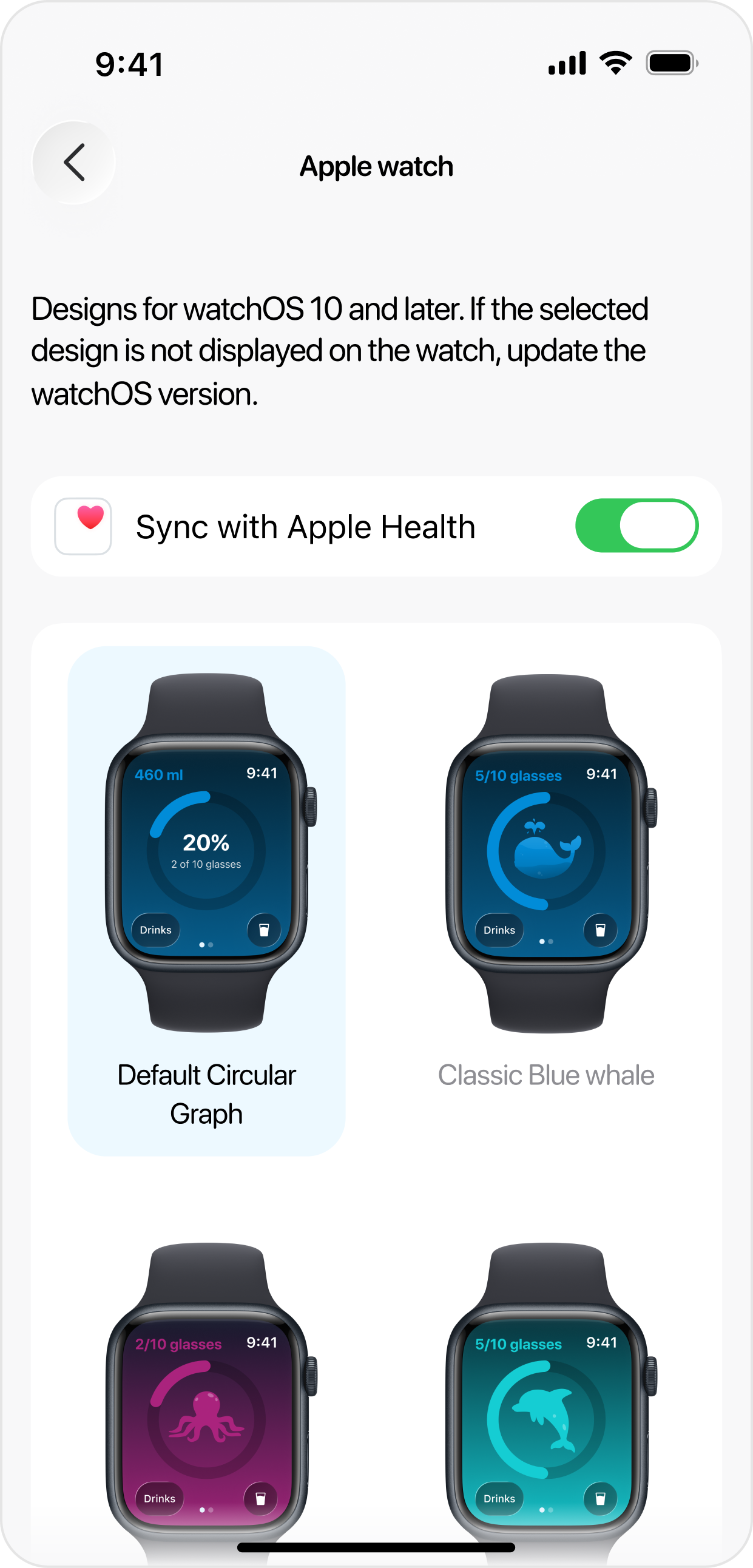
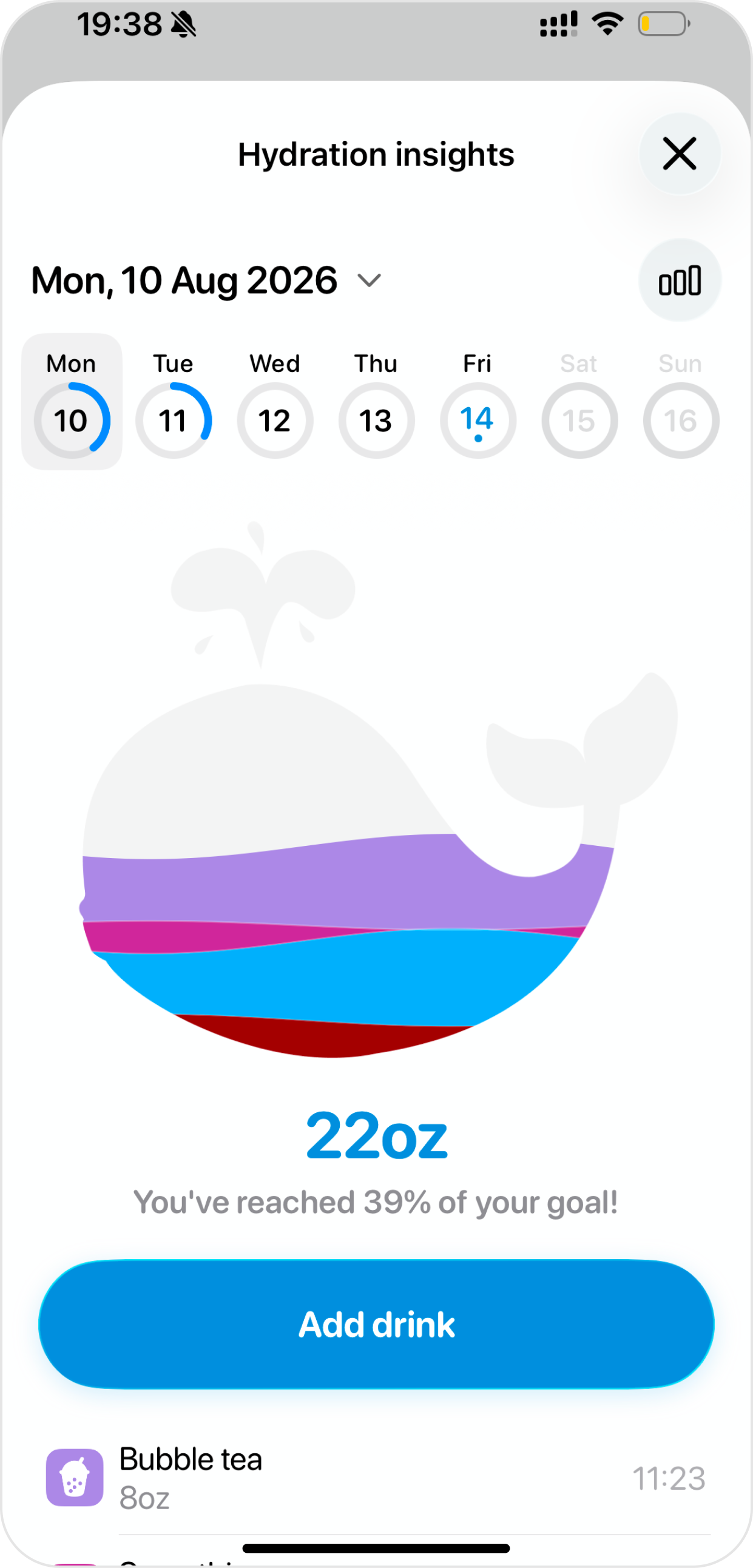
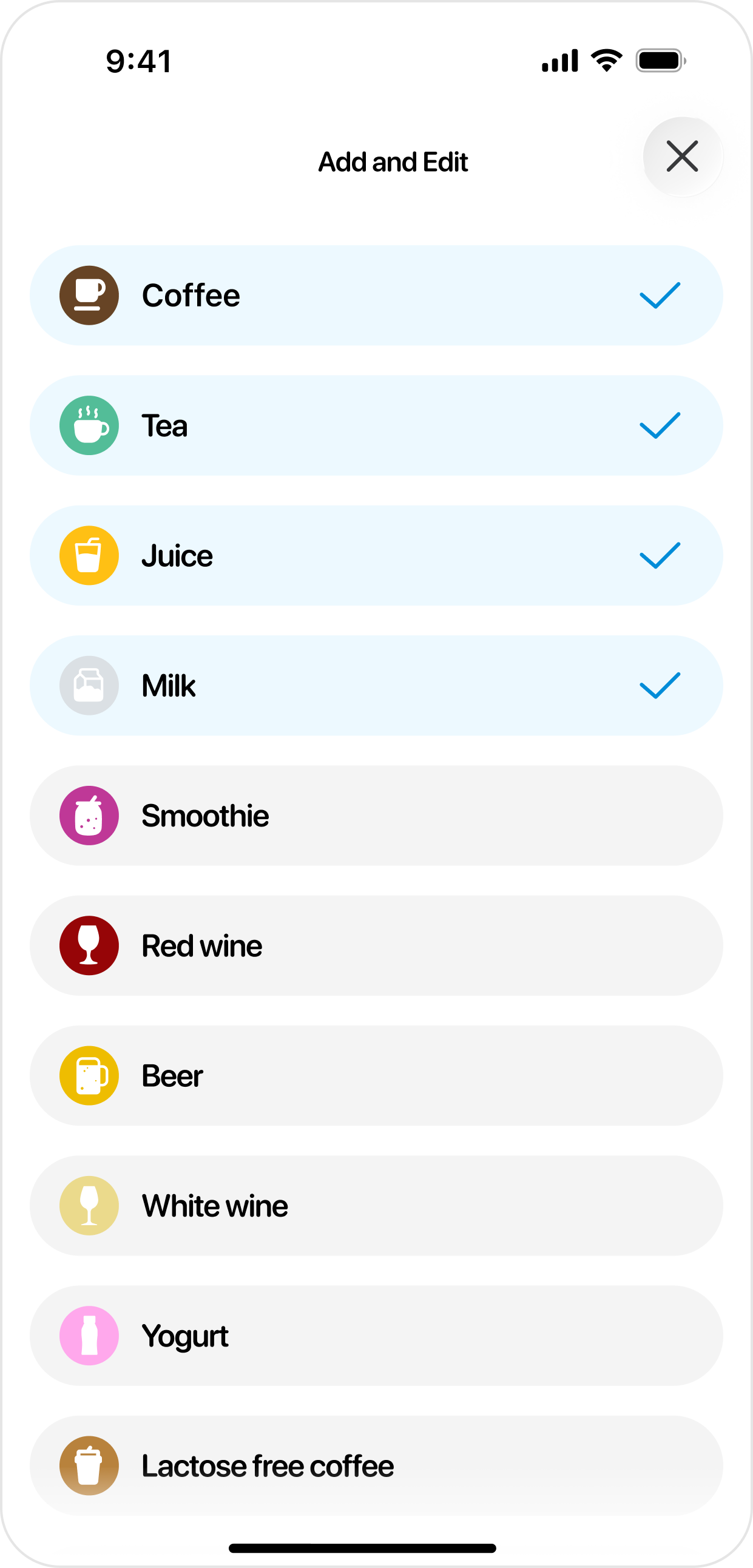
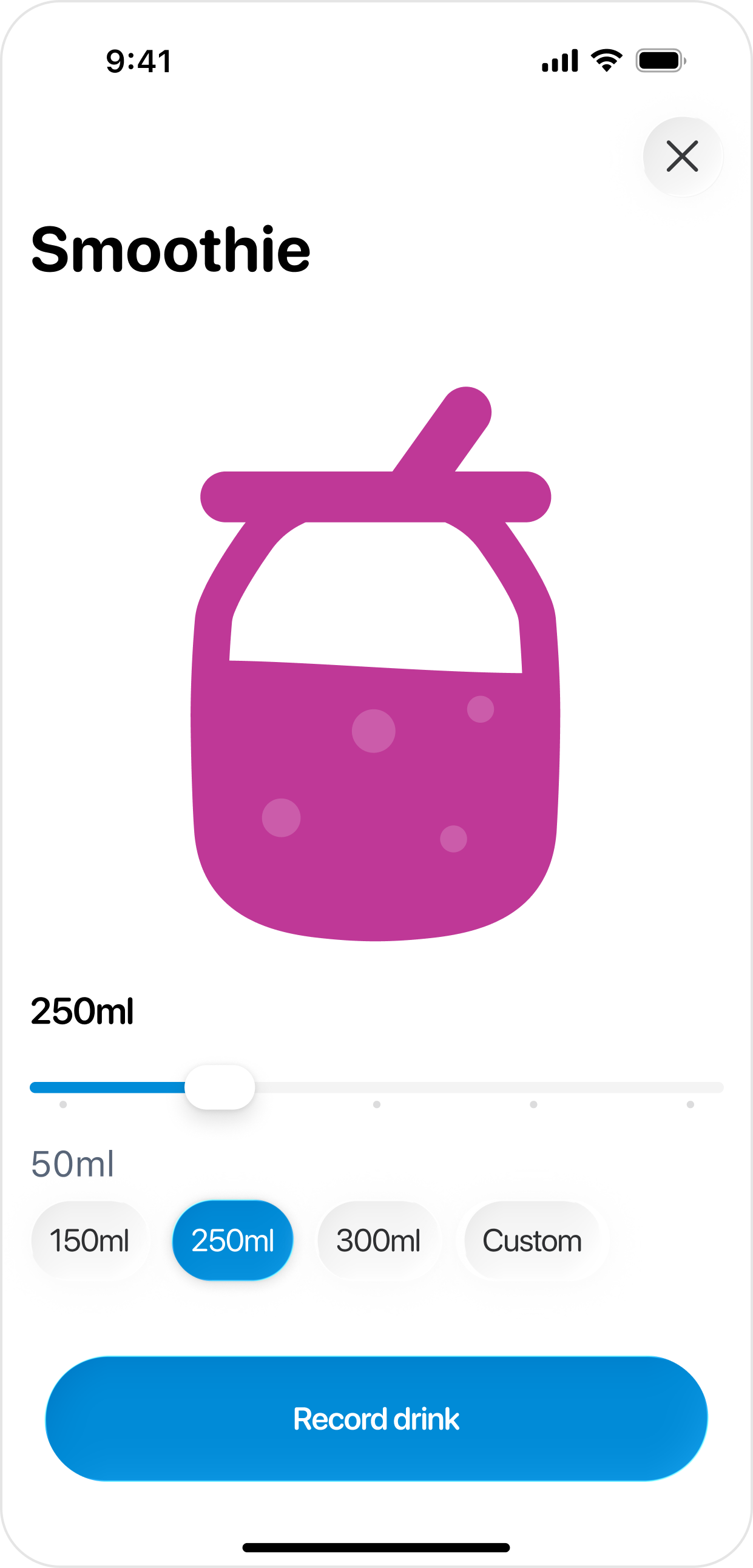
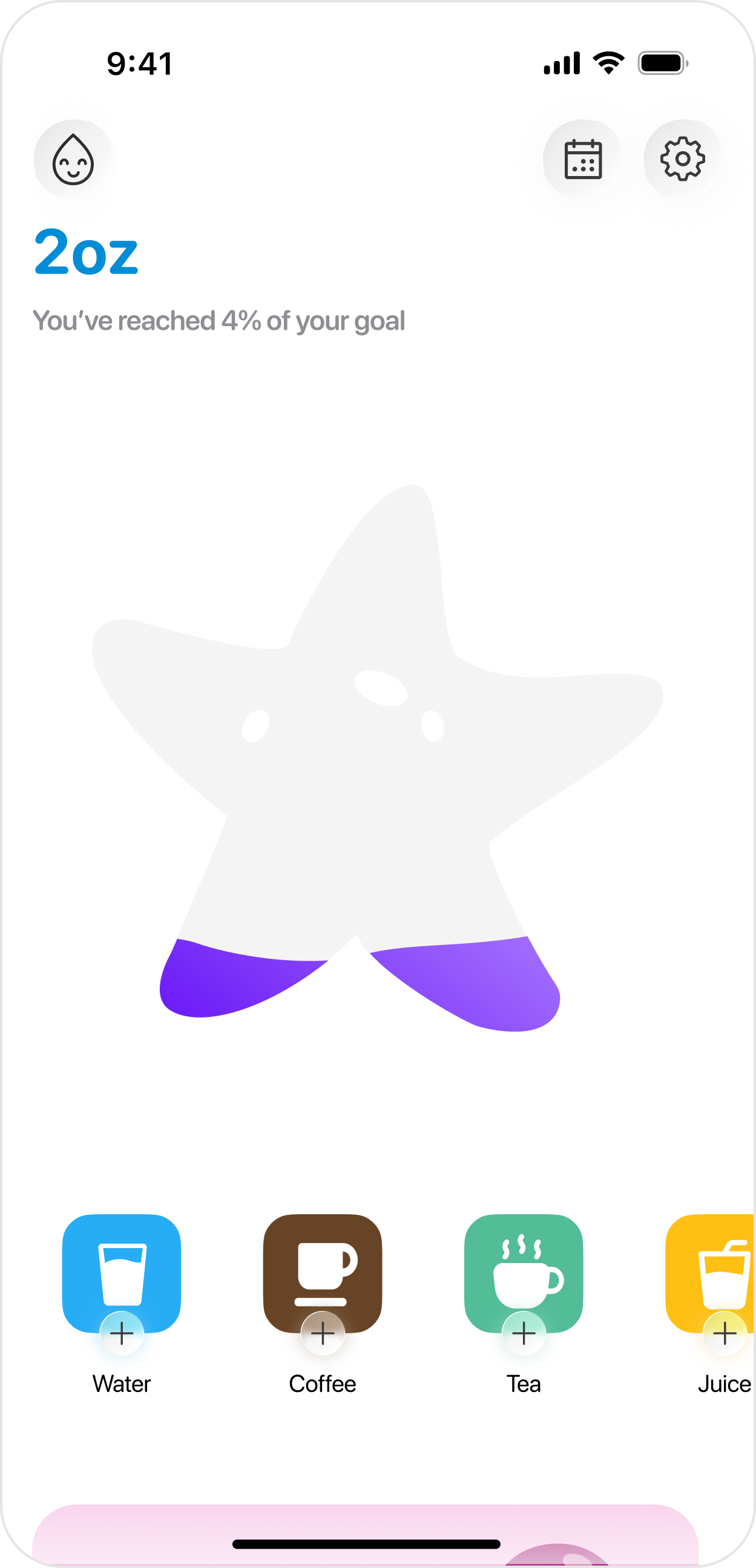
Low‑friction tracking, multiple entry points: the mobile app auto‑syncs consumption from the connected device, backed up by a one‑tap Add water button for anything the device doesn't catch, a home‑screen widget for logging without opening the app, and Apple Watch support for tracking on the go.
the main hydration dashboard, adding liquid occurs through the selection of drinks and the widget, showing today's progress and a quick-add action without opening the app
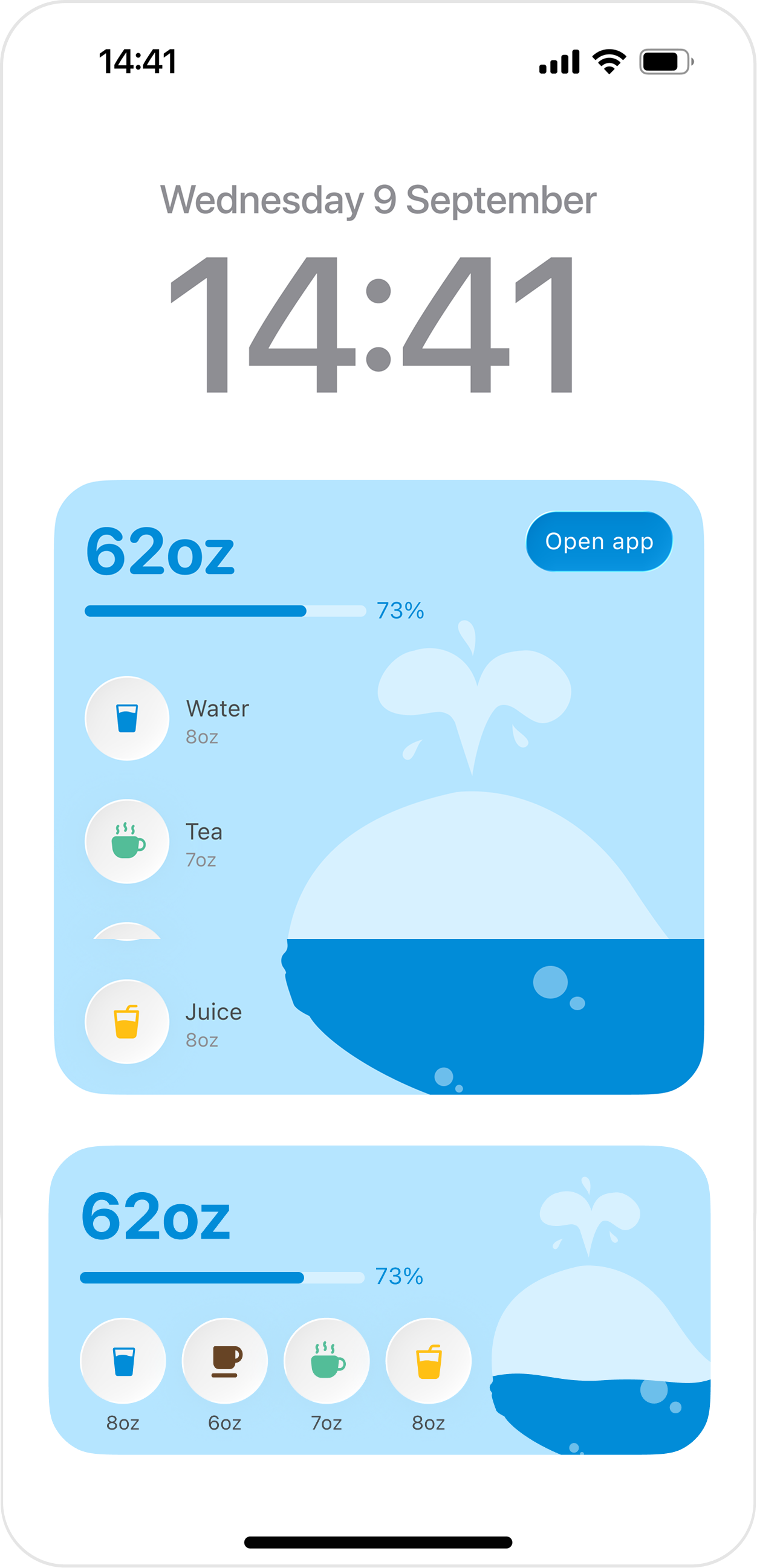
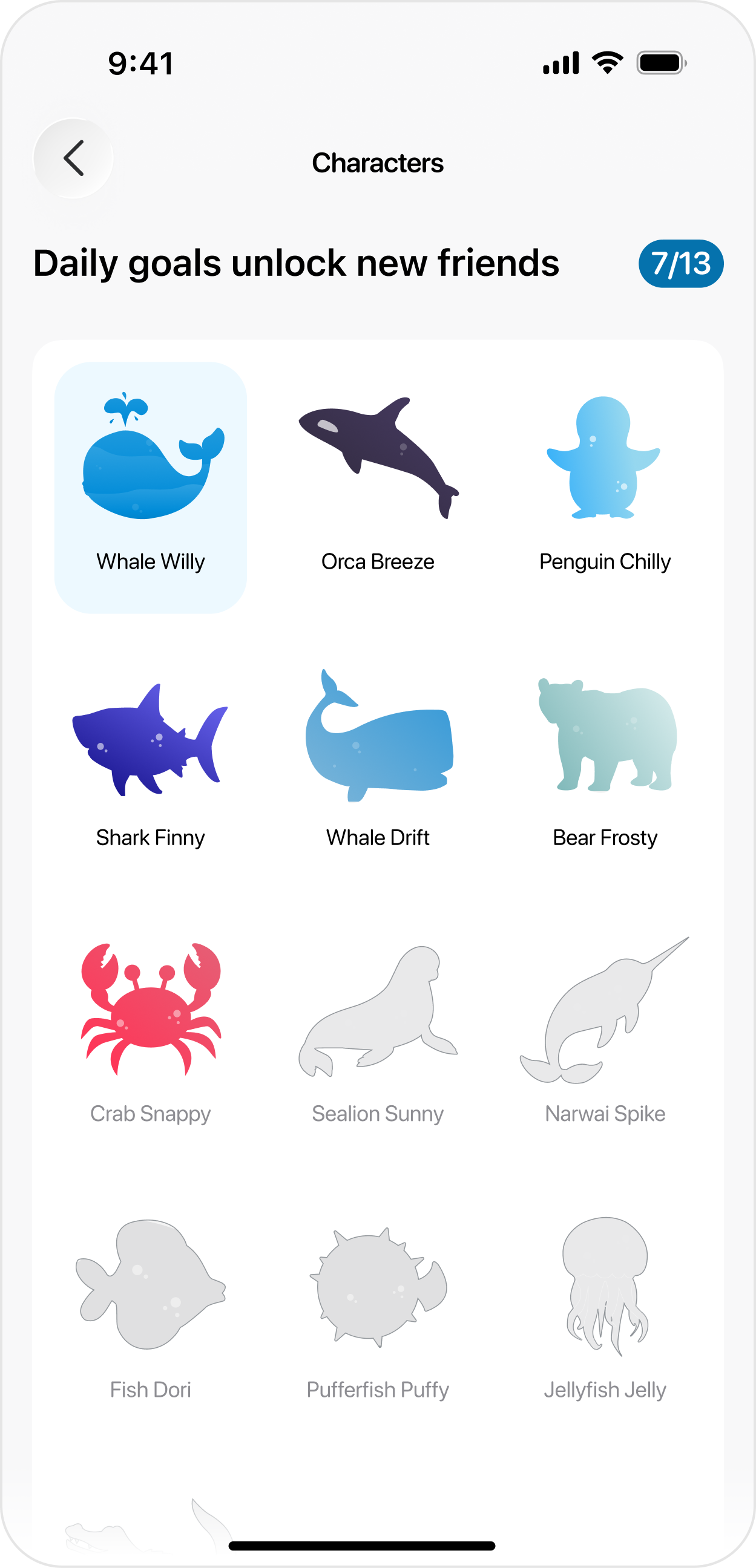
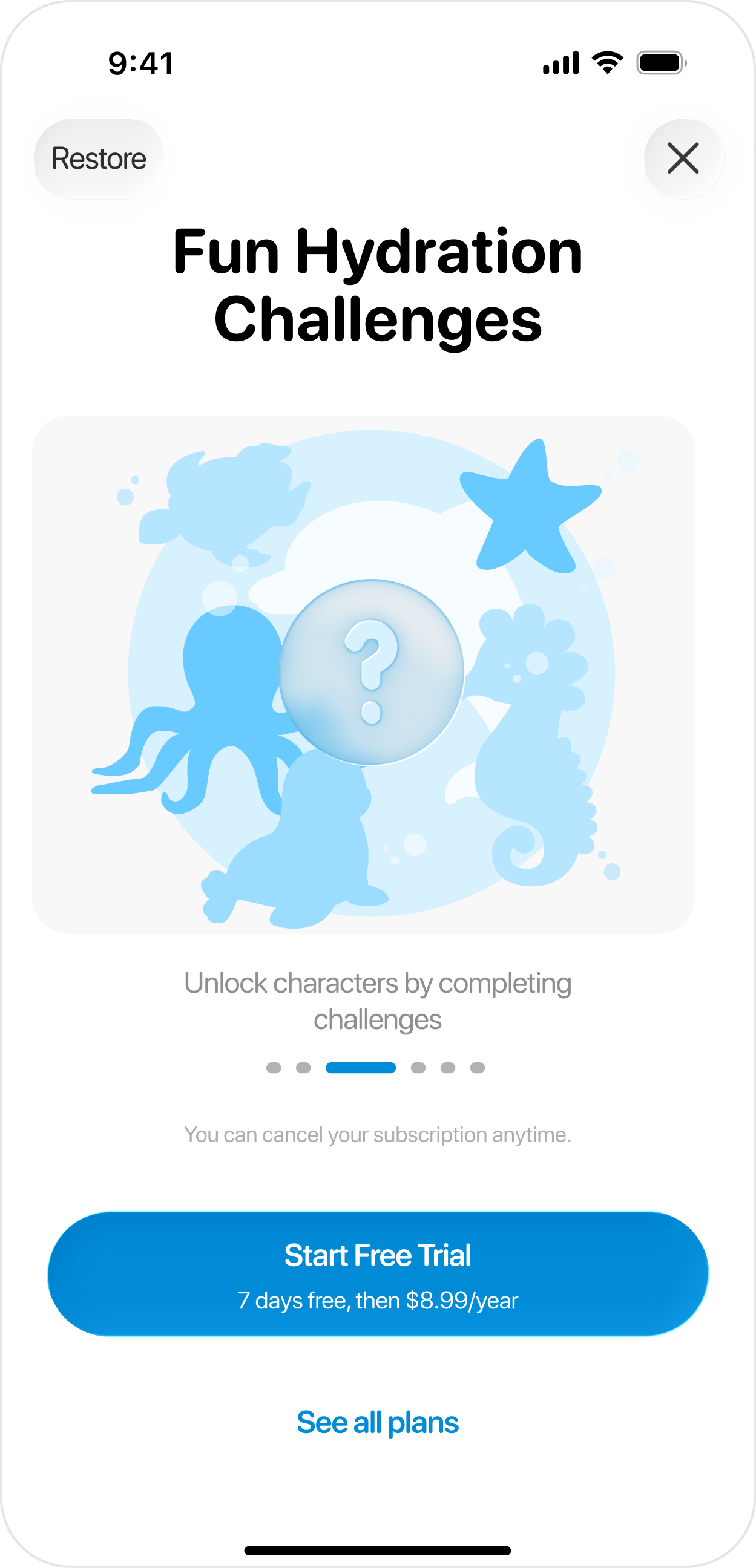
Mascot & collectible companions: a minimally styled whale leads a small cast of sea characters, unlocked one by one as the user hits their daily hydration goal or completes a challenge. Turns compliance into a light collection habit instead of a nagging reminder, reinforcing the core research insight that consistency, not awareness, is the real barrier.
the gallery/collection screen showing unlocked vs. locked characters
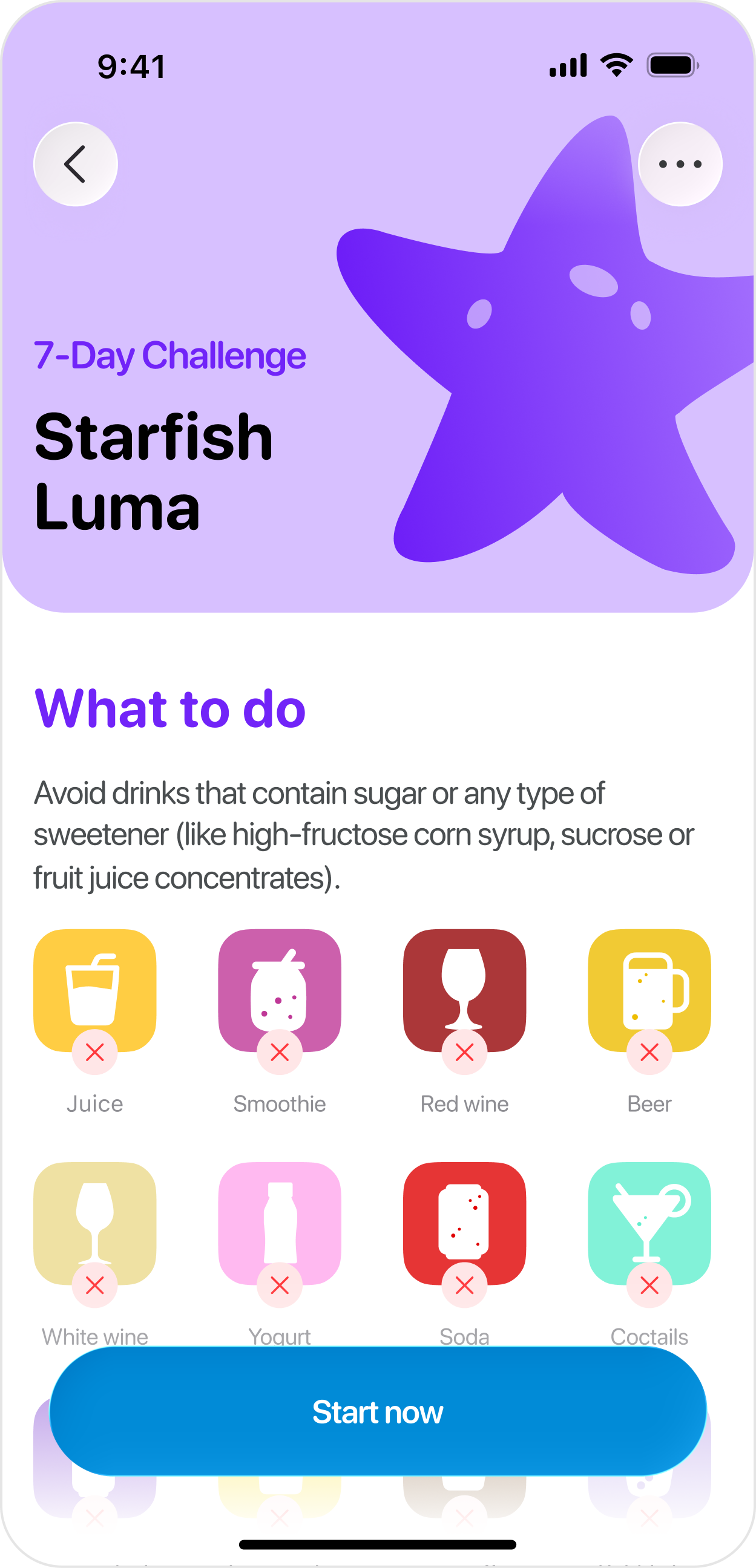
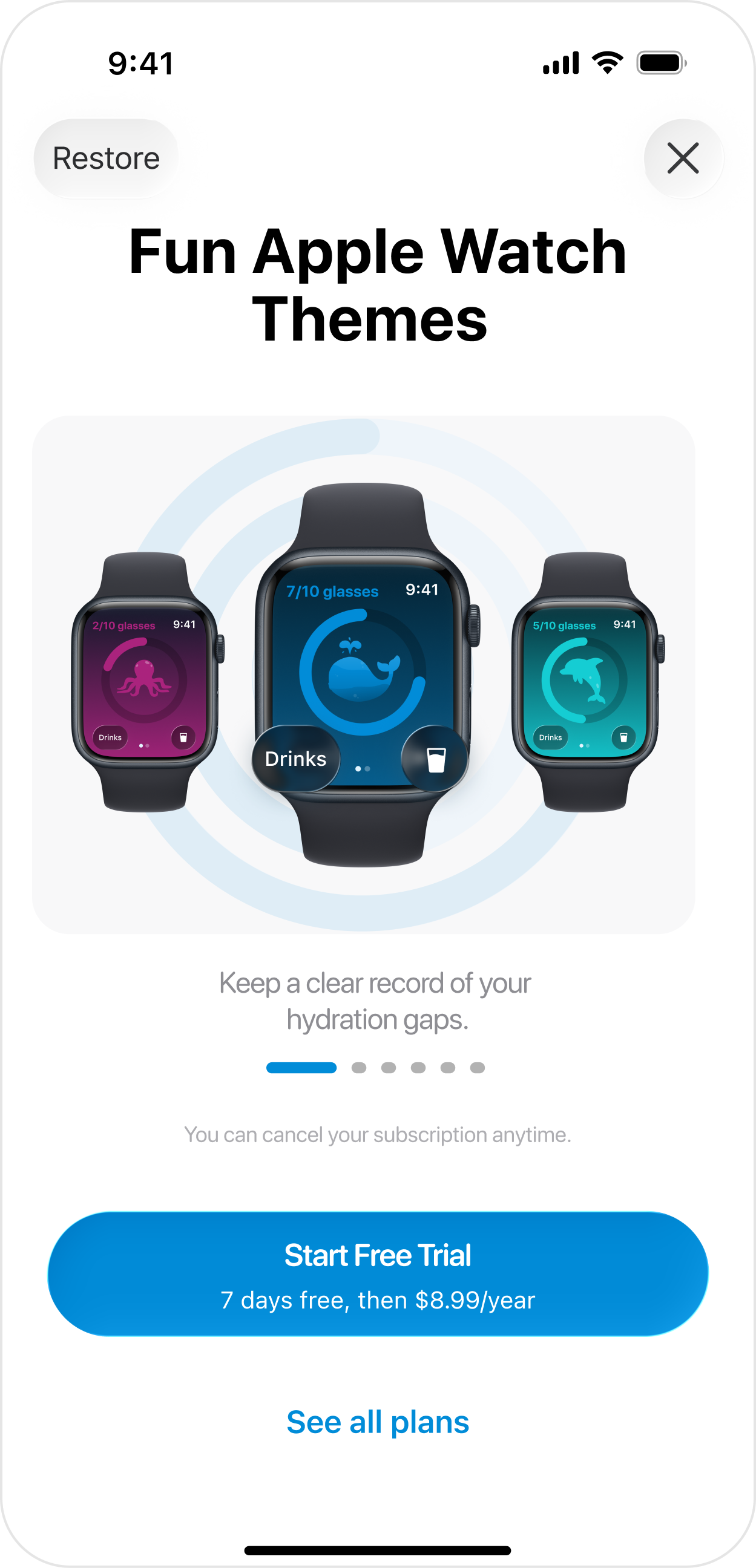
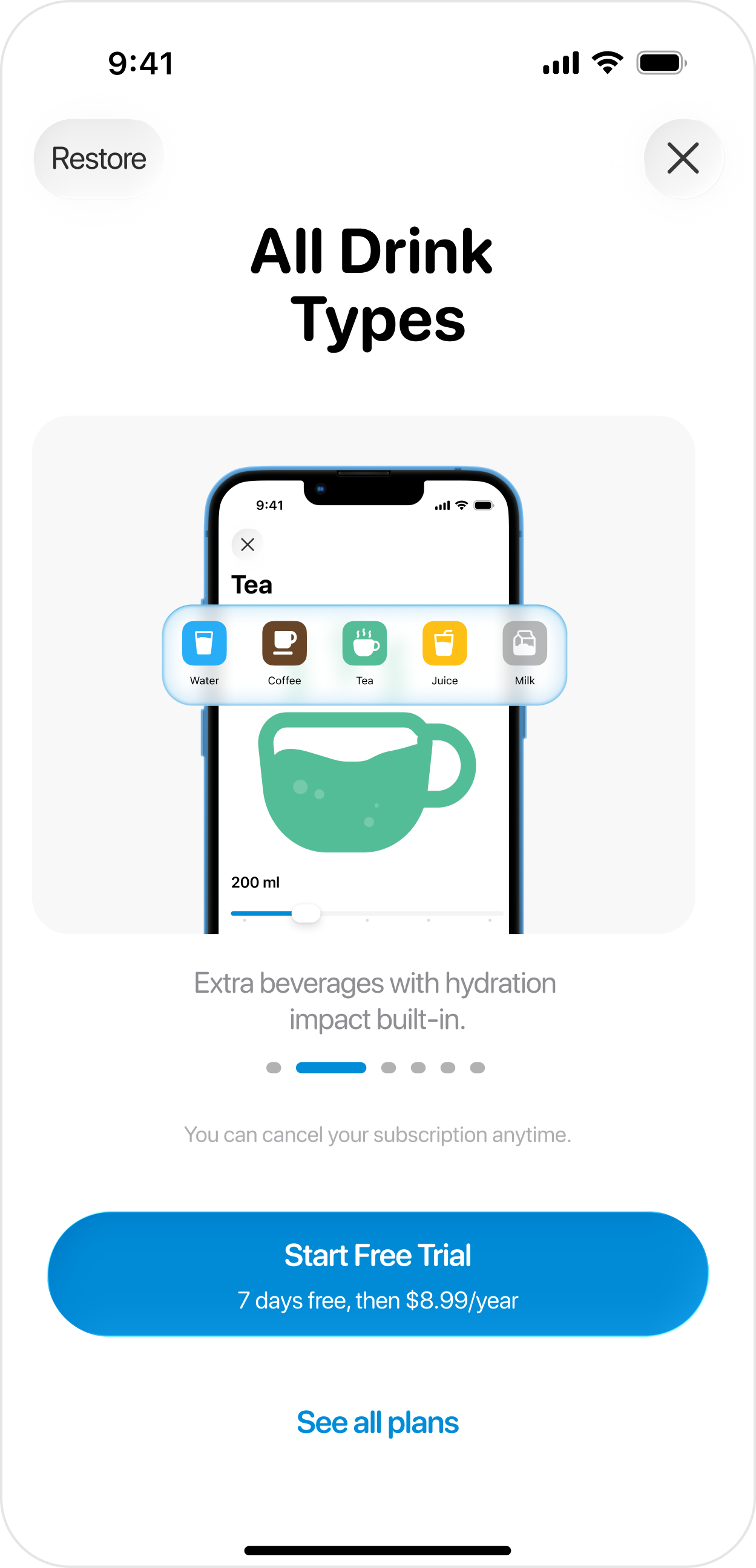
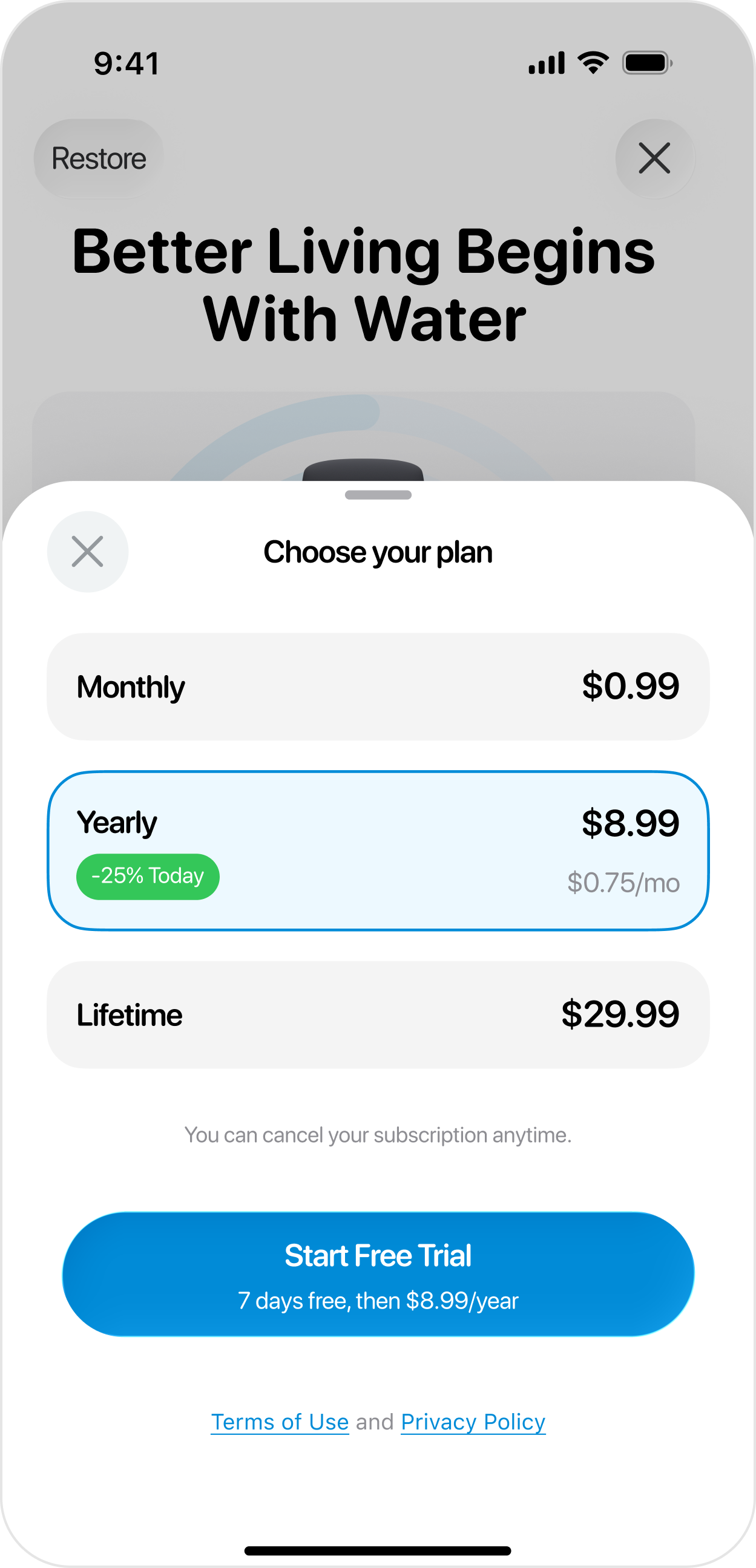
Subscription‑based monetization: the product's primary revenue model is subscription, with challenges, the full companion roster, and tracking for drinks beyond water gated behind the paid tier, designed as an upgrade path built into the existing engagement loop rather than a bolted‑on paywall.
subscription screens
10,000+ App Store users already relying on Waterbent for daily hydration tracking
Launched a fully functional beta with an early‑adopter circle, validating core user flows and resolving ~40% of critical usability issues before public launch.
The design system cut new‑screen design time by ~30%, speeding up delivery for the whole team.